The Investment Guide
Investing in Costa Rica real estate, with eyes open.
Strong demand is real — but returns vary enormously by location, property, and who manages it. Here's how to evaluate it like a pro.
The Investment Guide
Strong demand is real — but returns vary enormously by location, property, and who manages it. Here's how to evaluate it like a pro.
Costa Rica — especially Guanacaste's Gold Coast — has genuine investment appeal: established tourism, a stable democracy, US-timezone access, and consistent foreign demand. But a beautiful market is not the same as a guaranteed return. The investors who do well here treat it like an investment, not a postcard. This guide shows how.
The Thesis
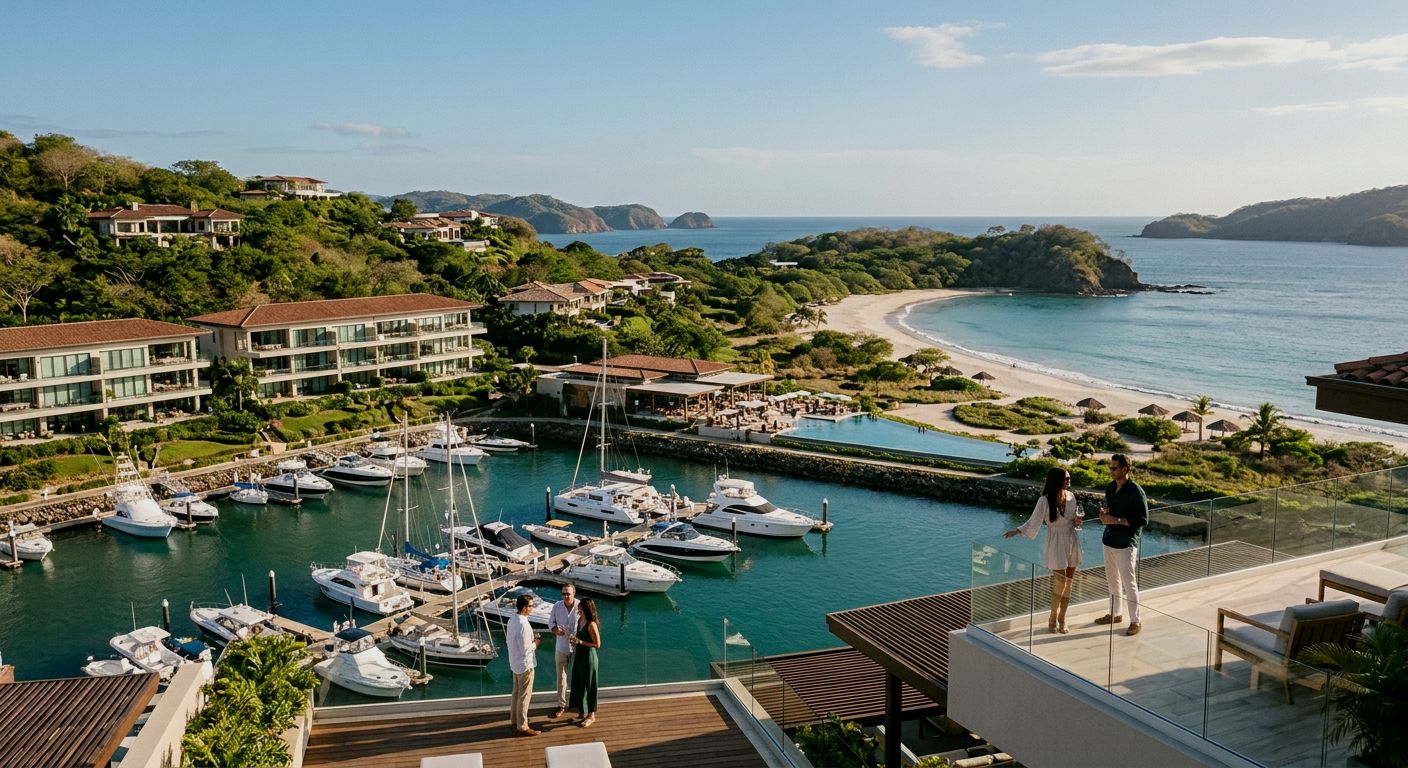
Not all of Costa Rica is an equal investment. Guanacaste's Gold Coast combines several things investors want at once: a steady stream of international tourism and relocating buyers, an international airport (Liberia, LIR) with direct US flights, dry-season weather that drives high-season demand, and a maturing inventory of resort-grade communities.
Within that, the difference between towns — and even between streets in the same town — is dramatic. A property two blocks from the beach in a walkable hub performs very differently from one in a quiet development. Micro-location is the whole game.
Rental Income
Short-term (vacation) rental demand is strong in the right spots, with a pronounced high season roughly December through April and a softer green season — we track current demand and seasonal trends in our Guanacaste market notes. Gross numbers can look exciting — but gross is not net. Real returns depend on true occupancy, nightly rate by season, HOA fees, management cost, maintenance in a tropical climate, and taxes.
Our Rental Income Estimator is a useful starting point for a realistic range. But a starting point is exactly what it is — actual performance is a conversation about a specific property, which is one of the most valuable things you can pressure-test in person.
Management
This is the lesson investors learn the hard way: a great property with a mediocre manager underperforms a good property with a great one — every time. When you're thousands of miles away, your management company controls occupancy, pricing, guest experience, reviews, maintenance response, and ultimately your cash flow.
Vetting management is not a detail to handle after closing — it's part of the underwriting. We introduce buyers to the property-management companies we'd actually trust, and walk through real numbers rather than pro formas.
Underwriting
What People Get Wrong
A pro forma is a sales document. Underwrite the net, on conservative occupancy, including every carrying cost.
Two properties on the same beach can have wildly different rental performance. The street matters as much as the town.
Your manager controls your return. Vet them before closing, not after the first slow season.
Photos hide the off-season reality. The investors who do best see the market on the ground first.
FAQ
Yes — foreigners can own and rent property. Rental income is taxable in Costa Rica; speak with a local tax professional about registration and obligations.
Short-term rental is widely operated in tourist areas, though regulations and HOA rules vary by community. Confirm the specific property's rules during due diligence.
It varies far too much by property and location to quote a single number honestly. Use the Rental Income Estimator for a range, then pressure-test it against a specific property and management plan.
High season is roughly December–April (dry season); the green season is softer. Conservative underwriting models both.
It's common for liability and estate planning, but situational. Your attorney advises based on your structure and goals.
The Exploration Concierge was built for people who want to experience Costa Rica before making a major decision — with local, buyer-side guidance every step.
Last reviewed June 2026
Written and maintained by CR Property Insider — buyer-side real-estate & relocation advisors based in Tamarindo, Guanacaste. Our guidance reflects firsthand, on-the-ground experience working with buyers across the Gold Coast.

Need help buying in Costa Rica?