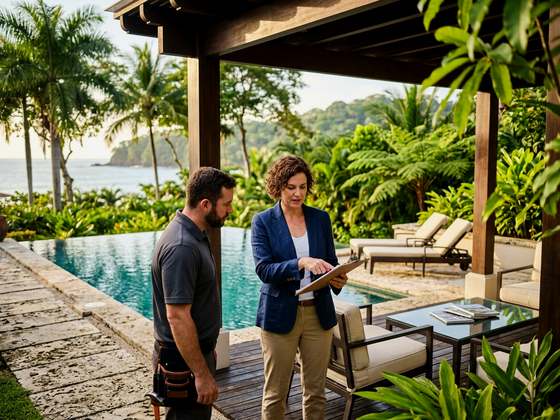
The estate had everything: six bedrooms, an infinity edge aimed at the Pacific, gardens that looked composed rather than grown, and the particular hush that money buys near the ocean.
What the listing didn’t mention was the org chart.
A property like that doesn’t maintain itself; it employs people. A gardener, twice weekly. A pool technician. A housekeeper. A handyman on retainer for the salt air’s constant edits. Each capable, each needing scheduling, payment, payroll obligations, Caja registration, December bonuses, and someone to notice when the pump sounds wrong.
“I retired from running a company,” he said, “and accidentally bought a smaller one.”
Estates aren’t purchases. They’re operations.
The spreadsheet grew. Maintenance on a coastal estate runs real money every year — one to two percent of the home’s value, in a climate that auditions every material daily. None of it optional. All of it, initially, routed through the owners’ phones at all hours.
The fix wasn’t selling; they loved the place. It was admitting what they owned and staffing it properly: a full-service estate manager to run the org chart, quarterly preventive schedules instead of breakdown calls, a real operating budget instead of a rolling surprise.
The monthly management fee initially stung. Then they noticed they had stopped talking about the house at dinner and started living in it again.
“I retired from running a company and accidentally bought a smaller one.”
The Story Timeline
The Cost
Lessons For Future Buyers
Insider Perspective
The bigger the home, the more it behaves like a small resort. We brief estate buyers on operating costs before they fall in love — because the right buyer shrugs at the org chart, and the wrong one deserves to know before closing.
 Phil LaboonFounder & CEO, Costa Rica Property Insider
Where They Are Now
Asked what he'd tell his younger self, he didn't hesitate: 'Buy the view. Hire the company. Skip the middle year.'
Considering Hacienda Pinilla? You can read the unfiltered local take on this area, or talk it through with us before you fall in love with anything.